Home » News updates and thoughts » Employment Law » Page 6

Category: Employment Law

Covid Vaccination Employee Rights

Coronavirus Image

Can an employer require employees to have a coronavirus (COVID-19)
vaccination?

Employers have a duty to ensure, as far as reasonably practicable, the health and safety at work of their employees. Asking employees to agree to a vaccination against coronavirus (COVID-19) is likely to be a reasonable step to take to reduce the risk to employees’ health.

Vaccinations are not currently available for employers to buy privately to provide for their employees, but employers can encourage employees to take up the vaccine when they are eligible under the national programme.

However, if employees do not agree to a vaccine, employers are limited in what they can do, beyond encouraging take up. An employer could consider informing employees that refusing a vaccination could lead to disciplinary action.

BUT There is a risk that such a policy could cause employee relations problems, as employees may feel strongly that this should be a personal decision. It would also raise several legal issues, with a particular risk of complaints relating to discrimination on grounds of religion or belief, disability, and age; constructive dismissal; and human rights issues.

Employers should be aware that employees may have a medical reason for not getting the vaccination.

It is currently unlikely that an employer would be able to use health and safety grounds to justify taking disciplinary action against an employee for refusing a vaccine, particularly in the early stages of the vaccination programme.

This may change over time, when more is known about the effects of the vaccination programme, but there is still likely to be an extremely high threshold to meet to justify such a policy. It may be possible in exceptionally high-risk circumstances, where alternative measures have been taken into consideration and where the policy accounts for the circumstances of individual employees.

Image: based on “MERS Coronavirus Particles“​ by NIAID used under CC BY 2.0top & bottom of image removed.

Redundancy Training Online

Redundancy training online

No one likes redundancies but when they have to occur it is imperative that they are managed professionally and all aspects of the law met.

HR teams, Operational Management and Employee reps face real challenges, not just how to meet and manage the complexities of the legislation but how to maintain staff motivation and moral when jobs are at risk.

Concrew Training’s short online training modules provide cost effective support.

find out more here

redundancy update training

redundancy slide

We have already seen a huge increase in redundancies. As Government support is phased out these will increase exponentially.

It is imperative for all involved that the redundancy process is legal and fair, well communicated and executed.

Getting it wrong increases the stress and worry for all, damages moral and commitment and opens the company up to unwanted adverse publicity and unfair dismissal claims.


Our one-day face to face training courses, delivered on your premises, on redundancies can be tailored to the needs of the differing parties, for example HR and operational managers looking to develop a robust structure or Employee/Union reps looking to understand the law and how best to support staff.


Social Media leads to Disciplinary Action & Dismissals

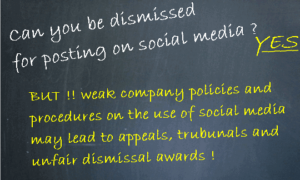
social media warning notice

Coronavirus has led to a surge in the use of video conferencing and social media; and with it an increase in the frequency of posts and comments that reflect poorly on the poster and the organisation they work for. Organisations need to be prepared.

2 key steps are essential, firstly implementing a well written robust policy of use of social media at work, and secondly training staff on it, highlighting how they should conduct their online presence and the consequences of inappropriate comments and posts.

Note: without a robust policy and associated staff training disciplinary action and dismissals due to inappropriate online behaviour usually fail.

We can tailor our face to face training to your exact needs, contact us for more information

stopping bullying and harassment

combatting bullying one day training course written on black board

Annual awareness training on the harm bullying and harassment causes helps remove these hideous practices from your organisation.

We can dovetail your inhouse policies and procedures into our training too.

Read the overview on our one-day course delivered on your premises here

Redundancies Loom – is your process robust?

redundancy PowerPoint slide

The big question for HR teams is, are you and your operational manager colleagues, ready for redundancies? Concrew Training can help. Contact us today.

As the UK comes out of #lockdown it is becoming increasingly clear that #redundancies will rise exponentially. Social distancing measures coupled with customer reluctance will hit hard. Many businesses will struggle to reach anything like their pre lockdown turnover levels. #Redundancy #training will be needed.

Retail, hospitality and leisure will be hit especially hard but there will be a knock on effect, consumer spending power will fall and the fear of the unknown will mean larger purchases are delayed. This will rock through the whole economy affecting virtually every sector.

Businesses will have little choice; they will need to re-align the size of their workforce to the post virus economy. This means redundancies are almost inevitable.

Hence the big question, are you and your operational manager, colleagues ready?

It is imperative for all involved that the redundancy process is legal and fair, well communicated and executed. Getting it wrong increases the stress and worry for all, damages moral and commitment and opens the company up to unwanted adverse publicity and unfair dismissal claims.

Concrew Training offers training and support for HR teams and operational managers to help them understand, the law, good practice and how to get the redundancy process right.

Image: “DSCF6527” by New Zealand Tertiary Education Union used under “CC BY-SA 2.0”

Redundancy Training for HR, Managers & Employee Reps

man in dispair sitting on wall with a drink

The coronavirus financial slump mean more redundancies are inevitable – Do you know the law, the rules, good practice?

Are you, your managers, your employee reps trained and ready, can you support staff fully and avoid unfair dismissal claims?

The UK is facing its worse depression ever, indeed we may already be in it.

In the aftermath of the 2008 financial crash some 50 businesses closed every day. Unemployment rose from the underlying 5% region to 7.6% in 2009, peaking 2 years later at 8.1%.

The coronavirus slump looks to be far worse, redundancies look inevitable

In April 2020, alone, the number of people claiming unemployment benefit rose by 856,500. This compares with a total increase of just 50,000 for the 3 months to end of March. Some forecasts suggest that job losses could exceed the 3.5million seen during summer of the Great Depression in 1932, more worrying some forecasts suggest total job losses could exceed 6 million or 21% of the workforce.

In the long term the country will survive, the country survive the great depression, it survived the Second World War, it survived the 12% unemployment peak of the early 80s

BUT in the short term, cut backs, short time working and redundancies are probable for all. Even those working in boom industries such as the funeral business need to plan ahead for a down turn in deaths.

This means all employers, their HR teams and employee representatives need to ensure that they understand the rules, regulations and best practice relating to lay-offs, short term working and redundancies.

Concrew Trainings one-day courses run on your premises and help senior managers, HR teams and employee/union reps understand the rules, best practice and how to apply them.

Links to Example Course Overviews below:

Employment Law Training

Redundancy Training

Employee Rep Training

We are accepting advance bookings now with the option to reschedule if social distancing rules return.

Disciplinary and grievance procedures during the coronavirus pandemic

the law - disciplinary-and-grievance

Acas has updated its guidance for employers wishing to commence disciplinary proceedings whilst social distancing and lockdown measures remain in place

They have also updated their guidance for employees wishing to raise grievances.

As always Concrew Trainings courses for HR teams and Employee Reps cover all.

Acas Say

“The law and Acas Code of Practice on disciplinary and grievance procedures still apply during the coronavirus (COVID-19) pandemic. This includes while social distancing and lockdown measures are in place.

The employer needs to decide if it would still be fair and reasonable to carry on with or start a disciplinary or grievance procedure while:

  • people are on temporary leave because of coronavirus (on ‘furlough’)
  • following social distancing and other public health guidelines, if they’re in the workplace
  • people are working from home, and it would have to be carried out remotely

An employee can still raise a grievance if they’re working from home or are on furlough.”

read the full advice here

Image:The Law by smlp.co.uk used under CC BY2.0

Social Media at Work – Policies and Procedures

Social Media at Work - Policies Procedures

With large numbers of the workforce “furloughed” or working from home the use of social media has increased significantly. It is important for all that the boundaries of what can and cannot be posted on social media are understood by all employees. In these troubled times no-one needs the added complications of dealing with inappropriate posts and comments.

We re-itterate below our linkedin article from 2015. It remains as current today as it did back then.

You need policies and procedures in place NOW !

Two recent UK Employment Tribunal cases, one involving Face book and another one with Twitter have one clear message in common for modern employers – the urgent need to have clear up to date, precise policies and procedures in place about the use of Social Media at work.

Both the cases profiled below could have been lost by the employer had they not previously taken proactive policy steps to keep up to date with an ever changing scene.

Face Book

The Face Book case arose from an unfair dismissal claim. The Employment Tribunal held that a pub manager was fairly dismissed for gross misconduct after she made inappropriate comments on Face book about two customers who had verbally abused and threatened her.

The Face Book chat took place while the employee was at work and did not reflect her upset or anger at the customers, but appeared to be a joke between friends. However, a wider audience was able to look at her Face Book page, including relatives of the customers in question. She told the court she should not have been sacked as she had thought that her privacy settings meant only “at work”.

But the court said her behaviour was found to be in breach of the employer’s clear Social Media policy which specifically referred to use of media such as Face Book while at work. It was found that the employee’s conduct had lowered the reputation of the employer and resulted in a fundamental breakdown of trust and confidence.

The Employment Tribunal found that the employee could not assert her right to freedom of expression and that the action taken by the employer was justified in view of the risk of damage to its reputation and the clear way in which the policy was linked to her contractual terms and conditions.

However, the case could have gone the other way had the pub chain not had Social Media policies and procedures in place.

All managers, businesses and organisations need to ensure that they are fully conversant with how when and where social media can be used by employees and have robust policies and procedures in place to support this.

UK Based Concrew Training’s one day good practice training course “usingsocial media at work – rights and responsibilitiesprovides this essential knowledge and understanding

Twitter

And in part for the very same reason, the Employment Appeal Tribunal (EAT) has just overturned an Employment Judge’s decision in a Twitter case that an employee was unfairly dismissed after posting offensive tweets.

The male claimant was employed as a risk and loss prevention investigator with responsibility for investigating losses and theft, for around 100 stores. Like many companies, his employer used Twitter and other social media for marketing purposes. Each of the 100 stores had its own Twitter account which was administered by each store manager.

The claimant used his own personal Twitter account to monitor the stores for which he was responsible to see if anything happened with their communications that was unacceptable. Of the 100 stores which he followed, 65 followed him in return after one store manager recommended that they should all do so by way of a tweeting endorsement.

The claimant started to use Twitter as a way to vent his frustrations at various non-work related issues, using highly offensive language. One of the store managers who followed him brought these offensive tweets to the employer’s attention. Following a disciplinary hearing, he was sacked for gross misconduct on the basis that he had posted “offensive, threatening and obscene tweets” which were available in the public domain.

The first Employment Tribunal decided that the decision to sack him was unjustified for the following reasons:-

  • He had not initially registered on Twitter as part of his job but principally communicate with friends outside work and concerning matters which were nothing to do with his job.
  • There was no evidence that any customer or member of staff was offended by the tweets
  • He had not posted anything derogatory about his employer or anything which would reveal he was its employee
  • He only engaged in tweeting offensive material in his own time and not on work time

But the Employment Appeal Tribunal (EAT) subsequently allowed the employer’s appeal on the finding of unfair dismissal.

They ruled that, in respect of various aspects of his reasoning, the first Employment Judge had either impermissibly substituted his own view for that of the dismissing employer, or had reached a decision which was perverse on the evidence.

For example, the EAT was dissatisfied with the Employment Judge’s reasoning that the employee was only using Twitter for “private” purposes when the reality was that he was followed by 65 of the 100 stores and had not set his account to “private”.

And again, as in the Face book case, judges drew attention to the presence of clear social media policies covering the workplace.

But this case could have gone another way because of the fact that the claimant’s personal Twitter account had been followed firstly by one store manager with a clear endorsement sent out by that boss to the other 99 managers that they should do so -64 of them did. That endorsement from the single store manager created an “association” between the employer’s and the claimant’s account.

A sharp reminder that any policy must be tangible and comprehensive enough to deal with the “grey areas” between personal and professional use of social media at work.

Concrew Training’s lively one day “Using Social Media at Work – Rights and Responsibilities” course covers all the latest case law and will enable you to either introduce or review your in house policies procedures from both an employment and service delivery perspective.

#hr #humanresource #socialmedia #ukemplaw #twitter #facebook #teaching #learning