Home » News updates and thoughts » Employment Law » Page 4

Category: Employment Law

Smarter Regulation to Save £1billion/year !!

The government is proposing a variety of changes to employment law in its policy paper“Smarter Regulation to Grow the Economy”.

These will it claims “cut red tape for businesses and save £1 billion per year while safeguarding the rights of workers”.

Announcing the “smarter regulation” proposals, business and trade secretary Kemi Badenoch said:

“I have listened to the concerns of businesses of all sizes and have made it a priority to tackle the red tape that holds back UK firms, reduces their competitiveness in global markets and hampers their growth.”

The paper published on Wednesday (10 May), proposes to:

  1. Legislate to limit non-compete clauses in employment contracts to a three-month duration
  2. Consult on suggestions to enhance the Working Time Regulations
  3. Roll up holiday pay
  4. Remove the requirement to elect employee representatives in TUPE consultations.

Additionally, the government revealed plans to scrap the controversial sunset clause in its Retained EU Law (Revocation and Reform) Bill, which would have automatically deleted every EU lawwhich hadn’t already been reviewed by the government at the end of 2023.

The Government now says it will “amend [the bill]to be clear which laws we intend to revoke at the end of this year”, it went on to say “This will also provide certainty to business by making clear which regulations will be removed from our statute book.”

McDonalds agree to prevent sexual harassment at work

McDonald’s signs a legal agreement with EHRC to protect staff from sexual harassment.

The new Worker Protection (Amendment of Equality Act 2010) Bill 2022-23 means the preventing sexual harassment at work will soon be at the of of every HR managers priorities. Training from Concrew can be a big help in meeting the new legislation.

Example course

McDonald’s Restaurants Limited has signed a legal agreement with the Equality and Human Rights Commission (EHRC) in response to concerns about the handling of sexual harassment complaints made by staff in its UK restaurants.

Under the legal agreement with the EHRC (known as a section 23 agreement under the Equality Act 2006), McDonald’s Restaurants Limited has committed to:

  • communicating a zero tolerance approach to sexual harassment
  • conducting an anonymous survey of workers about workplace safety
  • enhancing policies and procedures to prevent sexual harassment and improve responses to complaints
  • delivering anti-harassment training for employees
  • introducing specific training and materials to help managers identify areas of risk within their restaurants and take steps to prevent sexual harassment
  • supporting the uptake of policy and training materials by franchisees within their independent organisations to support reporting of sexual harassment
  • monitoring progress towards a safe, respectful and inclusive working environment

Read more here

Systems, Procedures, Training for Staff and Management play a big part. All Employers need to embed this as annual training now.

Concrew Training can help

Preparing for the new prevention of sexual harassment legislation

EHRC logo

Worker Protection (Amendment of Equality Act 2010) Bill 2022-23

This legislation creates new legal liabilities for employers by treating an employer as harassing their employee if the employee is harassed in the course of their employment by third parties (such as customers or clients) and the employer fails “to take all reasonable steps to prevent the third party from doing so”.

It also creates a new corresponding duty on employers to “take all reasonable steps to prevent sexual harassment” of their employees in the course of their employment. This duty will be enforced by the Equality and Human Rights Commission (EHRC) but employment tribunals would also be allowed to apply an uplift of up to 25% to employees’ compensation in sexual harassment cases where the employer had failed to uphold this duty.

This law is effectively an addition to the Equality Act 2010 passed by the Labour Government (1997 to 2010) in that it restores the original proactive and preventive duties removed by the Coalition Government (2010-2015).

Senior Leadership and HR teams need to start preparing NOW. The legislation will takeeffect one year after it receives Royal Assent. This is currently expected to be 2024. Whilst this may seem a long way off embedding change takes time and no organisation can afford to wait till the legislation is in place before they take measures to ensure their policies, approach and above all staff behaviour is robust.

Senior Leadership and HR teams needs to work proactively to ensure:

  • Policies and proceduresto support the implementation of the regulations are in place and understood by all.
  • The organisation has the skills and experience in place to risk assess and audit current performance both in house and throughout their supply chain.
  • That staff, clients/customers are well aware of their specific responsibilities and potential liabilities for breaches.
  • That all levels of management:
    • Understand the tangible links with other types of harassment as defined in the Equality Act
    • Fully appreciate that other civil and criminal laws can be invoked by a victim of harassment including those dealing with health, safety & well-being as well as “hate crimes” or those dealing with incitement and/or personal injury
  • Know where to obtain further advice, information and support.

All of the above will demand new processes, training and development to be put in place for all levels of management and staff. Indeed the senior leadership and HR teams may themselves benefit from attending CPD sessions. Concrew Training will be pleased to assist where required.

Concrew Training
February 2023

employment law updates 2023

Concrew Training Logo

What’s on the horizon for 2023 – see below. Our courses are updated to reflect the latest situations each time they run.

  • Remaining BREXIT clear out of European laws on employment and other work issues.
  • Strikes (Minimum Service Levels) Bill
  • Harassment Protection Bill 2022-23
  • Protection from Redundancy (Pregnancy and Family Leave) Bill 2022-23
  • Carer’s Leave Bill 2022-23
  • Neonatal Care (Leave and Pay) Bill 2022-23
  • Employment Relations (Flexible Working) Bill 2022-23
  • Employment (Allocation of Tips) Bill 2022-23.
  • Workers (Predictable Terms and Conditions) Bill 2022-23
  • Fire and Re Hire Statutory Code
  • Changes to Pro-rata holiday entitlement for part-year and irregular hours workers

Just a quick reminder about these important dates from April:-

1 April– National Minimum Wage: Annual increases in force. National Living Wage increases from £9.50 to £10.42.

2 April– Statutory pay rates: Statutory maternity, paternity, adoption and shared parental leave pay rates increase from £156.66 to £172.48.

6 April– Statutory pay rates: Statutory Sick Pay increases from £99.35 to £109.40.

6 April– Employment Tribunal awards: Annual increase expected.

8 May– Extra Bank Holiday

The last one -8th May – represents anextra Bank Holiday to mark the coronation of King Charles III.

As with other bank holidays, there is no statutory entitlement to time off, but employers may include bank holidays as part of a worker’s leave entitlement.

Whether employees who work on this bank holiday are entitled to additional pay for the day, or to reclaim the leave, is a matter for discussion between employees and employers. Employers may wish to consider that schools will be closed, so many parents will have to make alternative childcare arrangements to work on the day.

TUPE Harmonisation

Concrew Logo

After a TUPE transfer, it’s likely that those staff who have moved to the new employer will have different terms and conditions to the employees who already work for the new employer. What can be done about it?

Staff do not have an automatic right to the same terms and conditions as existing employees. Employers are expected to adhere to the new staff’s existing terms and conditions.

Operationally this is a challenge. Employers may find their workforce is employed under a wide range of very different terms and conditions.

Employees who transferred in several years ago may find that the employers terms and conditions have moved on whilst there own have remained static.

Employers may find it desirable to ‘harmonise’ their employees terms and conditions, that is to say change them so all staff, doing equal roles, work under the same terms and conditions. Employers can do this if it improves the terms and conditions of staff involved.

If changes to contracts are needed and the changes are needed for a reason that is not related to a TUPE transfer then this too may be possible.

HR teams and staff involved in TUPE transfers need to understand the process fully. Our courses for HR teams and Employee representatives are essential for all those involved in TUPE transfers.

A Simple Guide to the Equality Act 2010

 American and Rainbow Flag merged in water reflection

Employment and Service Guide 2022
This is an overview of equality law, summarising the main concepts and the role of the Equality and Human Rights Commission.

It covers: –

  1. The Equality Act 2010 -its scope and application for redress
  2. The Nine Protected Characteristics
  3. Direct and Indirect Discrimination
  4. Exemptions -Occupational Qualifications
  5. Positive Action -Not Positive Discrimination
  6. Discrimination by Association and Discrimination by Perception
  7. Discrimination on grounds of Disability and Reasonable Adjustments
  8. Harassment and Victimisation
  9. The work of the Equality and Human Rights Commission (EHRC)
  10. The Public Sector Equality Duty
  11. Equality Impact Assessments
  12. Vicarious Liability

Background
Equality laws are changing all the time. They go back to the Community Relations Act 1965 and the 1975 Race Relations Act & Sex Discrimination Act, followed by the Disability Discrimination Act 1995. And European directives on age, disability, gender reassignment, race & belief, religion, sex, sexual orientation as well as parental rights. Despite Brexit, all of these are absorbed into UK law. The Equality Act captures all these laws. At the time of writing the government plans to introduce new laws on: –

  • The Menopause
  • Sexual Harassment
  • Conversion Therapy
  • Carers Leave

In Spring 2022 there are, also, prevailing discussions and controversies around

  • Misogyny -the “Me Too Movement”
  • Black Lives Matter
  • Transgender Rights
  • Social Media -Cyber Bullying and Stalking

It is vitally important that everyone Directors, Operational Managers, Unions/Employee Reps and HR Teams and staff alike, keep up to date with everything on the equality and diversity agenda becausewe all have rights and responsibilitiesunder the various laws as employers, members of staff and as customers in receipt of goods, facilities, and services.

______________________________________________________________

1. The Equality Act 2010- Its scope and applications for redress

The Equality Act 2010 consolidates most equality law into one Act. It prohibits conduct and creates duties in relation to ‘protected characteristics. There are nine protected characteristics ranging from age through to sexual orientation.

The Act prohibits direct and indirect discrimination, and harassment and victimisation. It also prohibits discrimination in relation to something arising from a person’s disability and creates a duty to make reasonable adjustments for disabled people.

The Act applies in various scenarios, including at work, in education and in relation to the provision of goods, facilities and services as well as public functions.

Individuals seeking redress under the Equality Act on the grounds of unlawful discrimination can make applications to an Employment Tribunal in respect of the workplace or the County Court for service delivery matters. Successful cases will result in compensation being paid to the applicant taking account of:

  • Loss of Earnings
  • Injury to Health
  • Injury to Feelings

Every case turns on its own merits and there is no upper limit on the compensation that can be paid. Time limits for pursuing an employment claim and/or a service delivery claim are different. An employment claim must be lodged within three months of the date of the discriminatory act. A service delivery claim must be lodged within six months of the date of the discriminatory act.

Public authorities are subject to a Public Sector Equality Duty. The Duty means they must ‘have due regard’ to equality considerations when exercising public functions. Companies and private organisations which work with the public sector will often be asked to show how they are meeting the public sector equality duty in terms of whom they employ and serve.

The Equality Act and unlawful acts resulting from its contravention can also trigger links/referrals to the criminal law notably:

  • Incitement to hatred – “hate crimes”
  • Protection from Harassment Act
  • Malicious Communications Act
  • Sexual Offences

Prosecutions and subsequent convictions under these laws can carry heavy fines and/or substantial custodial sentences.

2. Nine Protected Characteristics

The Equality Act prohibits certain types of conduct and creates duties in relation to nine ‘protected characteristics. The nine protected characteristics are: –

Age:-which is defined as follows: –

(a)a reference to a person who has a particular protected characteristic is a reference to a person of a particular age group.

(b)a reference to persons who share a protected characteristic is a reference to persons of the same age group.

(c) reference to an age group is a reference to a group of persons defined by reference to age, whether by reference to a particular age or to a range of ages.

Disability:which is defined as follows: –

A person has a disability if s/he has, or has had, a physical or mental impairment which has a substantial and long-term adverse effect on their ability to conduct normal day-to-day activities. It includes recurring and progressive conditions (i.e., the adverse effect will arise in future because of the acquired condition) and certain illnesses and conditions such as cancer and HIV. Long Covid may emerge through caselaw as meeting this definition.

Gender Reassignment:– which is defined as follows: –

A person who is proposing to undergo, is undergoing, or has undergone gender reassignment (the process of changing physiological or other attributes of sex, therefore changing from male to female, or female to male to match the gender identity).

Marriage and Civil Partnership:– which is defined as follows:

A person has the protected characteristic of marriage and civil partnership if the person is married or is a civil partner. A married person is a person who is legally married under the Matrimonial Causes Act 1973. A civil partner is someone who has been registered as a civil partner under the Civil Partnership Act 2004. The provision is asymmetrical in nature since it only affords protection to people who are married or civil partners but not single people. It excludes people who have never married, divorcees, fiancées, “co habiteés” widows and widowers.

Pregnancy and maternity:– which is defined as follows:

Maternity refers to the period of 26 weeks after the birth (including still births), which reflects the period of a woman’s Ordinary Maternity Leave entitlement in the employment context. In employment, it also covers (where eligible) the period up to the end of her Additional Maternity Leave. It is unlawful to treat a woman unfavourable (e.g., asking her to leave) because she is breastfeeding.

Race:– which is defined as follows:

A person’s colour, nationality, ethnic or national origin. The term BAME (Black, Asian, and Minority Ethnic) or Ethnic Minorities refers to people who are not white British, by the UK Census definition. It includes people who would classify themselves under ‘White Other’ such as a White person from Eastern Europe, and travellers.

Religion or Belief:which is defined as follows

Religious and philosophical beliefsincluding lack of belief. A belief should affect your life choices or the way you live for it to be included in the definition. The following is not an exhaustive list: –

  • Atheists.
  • Baha’i.
  • Buddhists.
  • Christians.
  • Hindus
  • Humanists (form of atheism).
  • Jews.
  • Muslims.
  • No faith or religion.
  • Pagans.
  • Sikhs.

Sex:which is defined as follows

A man or a woman (biological sex). The term ‘gender’ means the social / psychological identity of being male or female.

Sexual Orientation:– which is defined as follows

A person’s sexual orientation / attraction towards the same sex (lesbian or gay), the opposite sex (heterosexual) or to both sexes (bisexual).

  • Lesbian women (L) and gay (G) women and men
  • Heterosexual men or women
  • Bisexual man (B) men or women.

3. Direct and Indirect Discrimination
The Act identifies two types of discrimination: direct and indirect.

Direct discriminationoccurs when a person, because of a protected characteristic, treats another less favourably than they would treat those without the characteristic. A workplace and service delivery example is shown next: –

Workplace – In the COVID-19 lockdown, common workplace examples that gave rise to direct discrimination included decisions that had been made around choosing who to furlough or not furlough, managing remote working, asking employees to return to the workplace andselection for redundancy.

Service Delivery –Traditional ways of doing things in the world of sports and leisure centres may not fit with some athletes’ religions. For instance, Jewish athletes cannot play a game on a Saturday and Muslim athletes may be prohibited from mixing with the opposite gender, including staff or spectators. Sports uniforms often pose problems for religious athletes. Players may feel uncomfortable wearing uniforms with sponsor logos that do not mesh with their beliefs (e.g., tobacco, alcohol, gambling). Uniforms may also be too revealing. Sports dress regulations should allow participants to wear religious head coverings.

Indirect discriminationoccurs when a person applies a ‘provision, criterion or practice’ which, although applied to persons with different protected characteristics (e.g., males and females) puts one group at a particular disadvantage (e.g., disadvantages females but not males). A workplace and service delivery example is shown below: –

WorkplaceA woman is forced to leave her job because her employer operates a practice that staff must work in a shift pattern which she is unable to comply with because she needs to look after her children at particular times of day, and no allowances are made because of those needs. This would put women (who are shown to be more likely to be responsible for childcare) at a disadvantage, and the employer will have indirectly discriminated against the woman unless the practice can be justified

Service Delivery –An outdoor activity centre provides a variety of activities from walks on gravelled areas to ones involving strenuous physical activities. Their policy says they will only let people do the activities if they have a medical certificate of good health. Ensuring health and safety is reasonable but applying a policy like this to every activity is likely to be indirect discrimination. This is because customers who had mental health problems would not be able to join any activities and so would be treated worse than other customers. People with mental health problems might be quite capable of doing any of the activities on offer as their mental health conditions would not affect their ability to take up exercise or taking up the less strenuous activities. But it will not be indirect discrimination if the outdoor centre is able to justify this policy by showing that it is: for a good reason, and appropriate and necessary.

4. Exemptions – Occupational Requirements

The Equality Act says that if an employer can show that a particular protected characteristic is central to a particular job, they can insist that only someone who has that particular protected characteristic is suitable for the job. This means that it can be an occupational requirement to be of a particular sex, race, disability, religion or belief, sexual orientation, or age, or not to be a transsexual person, married or a civil partner where having, or not having, one of those protected characteristics is central to the job. Usually, the headings for occupational qualifications centre on: –

  • Authenticity
  • Physiology
  • Privacy and Decency
  • Religious or other susceptibilities

Examples — A women’s refuge may want to say that it should be able to employ only women as counsellors. Its client base is only women who are experiencing domestic violence committed by men. This would be a genuine occupational requirement.

5. Positive Action – Not Positive Discrimination

The Equality Act allows employers to use the positive action general provisions. Positive Action gives individuals from under-represented groups a chance to access support and training, in preparation for and throughout recruitment process, to overcome disadvantages competing with others.

Example: –A local fire service identifies from its monitoring data that women are under-represented as firefighters. The service makes clear in its next recruitment exercise those applications from women are welcome and holds an open day for potential women applicants at which they can meet women firefighters. However, the fire service must not guarantee that all women will get through the initial stages of the application process, regardless of their suitability.

The difference between an occupational requirement and positive action is that:

  • An employer using an occupational requirement says that only people with a particular protected characteristic can do the job.
  • An employer who wants to use positive action says that anyone who has the right skills, knowledge and experience is able do the job, but they want to look especially hard for someone with a particular protected characteristic.

6. Discrimination by Association and Perception

Discrimination by Association
The Equality Act also protects you if people in your life, like family members or friends, have a protected characteristic and you are treated unfairly because of that.

This is called discrimination by association.

Examples from the workplace and in service delivery: –

Workplace – Jo has a disabled child. Jo has needed to take several days off at short notice to take their child to medical appointments related to their disability. Jo overhears their manager say, “the amount of time off that child causes is not acceptable”. The next day, Jo is dismissed.

Service Delivery -Sylvie is a solicitor who represents people with mental health problems. She goes to a café with her clients and the owner tells her that he does not want her using his café because she acts for people with mental health problems, and he does not want them on his premises because he says it will disturb other diners.

Discrimination by Perception
It is against the law to discriminate against someone because of a ‘perceived’ characteristic – this means thinking someone has a characteristic when they do not. The legal term is ‘discrimination by perception’. The word ASSUME comes into its own here!

Examples of workplace and service delivery appear next-

Workplace -A heterosexual man employed in an office has a high-pitched feminine sounding voice. A colleague in the workplace assumes he is a gay man and subjects him to detriments because of his own prejudiced views.

Service Delivery – John does not have a mental health problem. He is asked to leave a gym where he is exercising as the organiser hears a false rumour that John hasschizoaffective disorder.

7. Discrimination arising from disability

In addition to direct and indirect discrimination, the Equality Act states that a person discriminates against a disabled person if they treat the disabled person unfavourably because of ‘something arising in consequence’ of their disability.

An Equality and Human Rights Commission Statutory Code Practice gives an example:

Example

A mother seeks admission to a privately run nursery for her son who has Hirschsprung’s disease, which means that he does not have full bowel control. The nursery says that they cannot admit her son because he is not toilet trained and all the children at the nursery are. The refusal to admit the boy is not because of his disability itself; but he is being treated unfavourably because of something arising in consequence of his disability.

This type of discrimination will be unlawful if the person cannot justify the treatment. However, it will not be unlawful discrimination if the person can show they did not know, and could not reasonably have been expected to know, about the disability.Here is an example: –

The licensee of a pub refuses to serve a person who has cerebral palsy because she believes that he is drunk as he has slurred speech. However, the slurred speech is a consequence of his impairment. If the licensee is able to show that she did not know, and could not have been expected to know, that the customer was disabled, she has not subjected him to discrimination arising from his disability. However, in the example above, if a reasonable person would have known that the behaviour was due to a disability, the licensee would have subjected the customer to discrimination arising from his disability, unless she could show that ejecting him was a proportionate means of achieving a legitimate aim.

Reasonable adjustments for disabled people

The Equality Act also creates a positive duty to anticipate the needs of, and make reasonable adjustments for, disabled people. For example, in the context of services, the objective of the duty is to, as far as is reasonably practicable approximate the access enjoyed by disabled people to that enjoyed by the rest of the public.

The purpose of the duty to make reasonable adjustments is to provide access to a service as close as it is reasonably possible to get to the standard normally offered to the public at large.

The disability duty comprises four requirements. The four requirements are to ‘take such steps as it is reasonable to have to take’ to:

  • avoid putting disabled people at a substantial disadvantage where a provision, criterion or practice would put them at that disadvantage compared with people who are not disabled – for example, adjusting a ‘no dogs’ policy for visually impaired people
  • remove, alter, or provide means of avoiding physical features where those features put disabled people at a substantial disadvantage compared with people who are not disabled – for example, providing a wheelchair ramp alongside stairs
  • provide an auxiliary aid where disabled people would, but for the provision of that aid, be put at a substantial disadvantage in comparison with people who are not disabled – for example, providing an induction loop for hearing impaired people.

What is deemed to be reasonable will depend on the circumstances.

The Equality and Human Rights Commission has identified the following potentially relevant factors:

  • whether taking the step would be effective
  • the extent to which it is practicable
  • the financial and other costs of making the adjustment
  • the availability of the necessary financial and other resources
  • the extent of any disruption which taking the steps would cause
  • the amount of any resources already spent on making adjustments.

The only way to determine for certain whether any adjustment would be reasonable to have to make is for a court to decide the issue.

8. Harassment and Victimisation
The Equality Act also prohibits harassment and victimisation.

Harassment is defined as engaging in unwanted conduct related to a protected characteristic, which has the effect of violating a person’s dignity or creating an intimidating, hostile, degrading, humiliating or offensive environment for that person.

Examples of this include:

  • A white worker who sees a black colleague being subjected to racially abusive language could have a case of harassment if the language also causes an offensive environment for her.
  • An employer who displays any material of a sexual nature, such as a topless calendar, may be harassing her employees where this makes the workplace an offensive place to work for any employee, female, or male.
  • A shopkeeper propositions one of his shop assistants. She rejects his advances and then is turned down for promotion which she believes she would have got if she had accepted her boss’s advances. The shop assistant would have a claim of harassment.

Victimisation is defined as subjecting an individual to detriment because they have done a ‘protected act’ (or in the belief that they have). Broadly, the protected acts are acts relating to bringing a claim under the Equality Act or alleging a person has contravened the Act.

For example:

  • A gay man sues a publican for persistently treating him less well than heterosexual customers. Because of this, the publican bars him from the pub altogether. This would be victimisation
  • A colleague gives support to a colleague taking an employer to a tribunal and is sacked. This would be victimisation

9. The Public Sector Equality Duty

The Equality Act says that public authorities must, in the exercise of their functions, ‘have due regard to the need to’:

  • eliminate discrimination, harassment, victimisation, and any other conduct that is prohibited by the Act
  • advance equality of opportunity between persons who share a relevant protected characteristic and persons who do not
  • foster good relations between persons who share a relevant protected characteristic and persons who do not.

The Act does not identify what is meant by the phrase ‘have due regard.’ However, the term has been considered extensively by the courts.

Broadly, the principles that emerge from the case law are:

  • the duty concerns the impact of a proposal on all persons with protected characteristics and on any class of persons within a protected category who might clearly be adversely affected
  • it is not a question of ticking boxes, the duty must be approached in substance, with rigour and with an open mind
  • the duty must be fulfilled both before and during consideration of a particular policy
  • the public authority does not have to refer expressly to the duty whilst exercising a public function
  • decision-makers must be aware of the duty • the duty is non-delegable
  • it is good practice for an authority to keep a record showing that it has considered the identified needs
  • it is for the decision maker to decide what weight to give to the equality implications of the decision.

Public authorities who work or contract with non-public bodies will often want evidence that these stakeholders fully meet the public sector duty in an appropriate way.

10.Equality Impact Assessments – EIAs

It is important for public authorities to record the steps they have taken to meet the Duty.

Aside from this helping the authority to comply with the Duty in practice, it would also be an important evidential requirement should the authority be challenged in court for failing to comply with the Duty. One of the ways (but not the only way) an authority can demonstrate this, is through conducting an equality impact assessment. Our courses and toolkits help.

11. The Equality and Human Rights Commission

The Equality and Human Rights Commission (EHRC) was established with a duty to promote and encourage understanding of equality and human rights.

Individuals enforce their rights under the Equality Act 2010 before the courts. However, the Commission also has a range of powers at its disposal to enforce equality law at a more institutional level, and often strategically intervenes as a party to litigation if doing so could help develop equality law.

Broadly, the Equality Act requires the EHRC to promote and encourage the understanding of – and good practice in relation to – equality and human rights. The Act contains the EHRC’s ‘general duty,’ which requires the EHRC to encourage and support the development of a society in which:

  • people’s ability to achieve their potential is not limited by prejudice or discrimination • there is respect for and protection of each individual’s human rights
  • there is respect for the dignity and worth of each individual
  • each individual has an equal opportunity to participate in society
  • there is mutual respect between groups based on understanding and valuing of diversity and on shared respect for equality and human rights

12. Vicarious Liability

An employer can be vicariously liable for the acts of its employees in breach of discrimination law.An employer has a defence to vicarious liability under the Equality Act if it can show that it took all reasonable steps to prevent the employee from doing the alleged act of discrimination or from doing anything of that description. Reasonable steps might include training, robust disciplinary & grievance procedures as well as equality impact assessments which are more than just a “tick box” exercise.

Our courses on equality, diversity and employment law help you and your teams understand the key principles and latest developments


Image: “American Rainbow Flag” from the Public Domain

Extra Hours, Holiday Pay and Back Dated Pay Rises

pay benefits mind map

We are aware that some organisations have not still not reacted to the Employment Appeal Tribunal Rulings on holiday pay. Additionally some organisations appear to be restricting back dated pay increases to contracted hours worked.

Minimum 5.6 weeks Holiday Pay
Whilst the outcome of the The Harpur Trust v Brazel appeal to the Supreme court remains pending employers should give good consideration to following the earlier employment appeal tribunal rulings notably; that holiday pay for those working less than 52 weeks a year are entitled to the same weekly holiday entitlement as those working full time. A minimum of 5.6 weeks applies in both cases.

Holiday Pay based on Hours worked
There are numerous Employment Tribunal rulings that make it clear that holiday pay for those on zero or variable hour contracts or those who work regular overtime must have a minimum of 4 weeks their holiday pay per year paid based on the average hours worked over the preceding 52 weeks.

There is no ruling on what constitutes “regular overtime” but given the negative goodwill that develops when staff feel they are being unfairly treated employers are advised to be generous.

Back dated pay increases
when pay increases are awarded retrospectively employers need to take care that they do not discriminate. Restricting pay increases to contracted hours, for example, may lead to breaches of the minimum wage regulations and/or part time workers regulations.

Image Credit: A wordcloud featuring “Salary” by EpicTop10
(note: the author EpicTop10 and their products are not related to nor endorsed by Concrew training)

Understanding Menopause

Female Menopause, employment law and reasonable adjustments

Operational Managers and HR teams need to understand the female menopause, its symptoms, impact and what reasonable adjustments should be considered to support those affected.

Delegates on our employment law and equality courses often ask about it so we thought it useful to release this short briefing document so support a wider audience.

1. Introduction
The menopause is a natural event in most women’s lives during which they stop having periods and experience hormonal changes such as a decrease in oestrogen levels.

It usually occurs between the ages of 45 and 55 and typically lasts between four and eight years. However, each woman’s experience will differ, and menopausal symptoms can occasionally begin before the age of 40. Perimenopause, or menopause transition, begins several years before menopause. Women may start to experience menopausal symptoms during the final two years of perimenopause.

The “male menopause” (sometimes called the Andropause) is an unhelpful but often used term. Males may, experience symptoms that appear outwardly similar to those experienced by women and at a similar age BUT they are not related to a drop in testosterone levels so not technically a menopause. The symptoms can interfere with everyday life and happiness, so it is important tofind the underlying cause and work out what can be done to resolve it.”

This briefing focusses on the female menopause but in the interests of balance more detail regarding the male Andropause (menopause as it is often, albeit incorrectly, called) is covered in section 9

This briefing note considers the female menopause: –

  • Symptoms
  • Suggested Internal and External Support Ideas
  • Reasonable Adjustments that might be needed
  • Laws related to the Menopause
  • Discrimination and Equality issues
  • GDPR and Data Protection
  • Landmark Cases

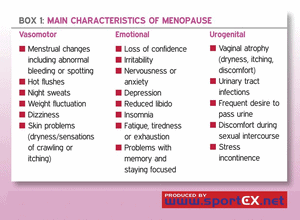
2. Symptoms can include

  • Hot flushes and night sweats
  • Dizziness and fatigue.
  • Memory loss.
  • Depression and headaches.
  • Recurrent urinary tract infections.
  • Joint stiffness, aches, and pains.
  • Reduced concentration; and heavy periods.

Each of these symptoms can affect an employee’s comfort and performance at work.

All businesses and organisations have a duty to provide a safe working environment for all employees and therefore will usually commit to ensuring that adjustments and additional support are available to those experiencing menopausal symptoms.

3. Suggested Internal and External Support
The aim should be to facilitate an open, understanding working environment.

All employees can be asked to attend a training session on the menopause/health issues including the menopause to increase awareness.

Managers will benefit from attend this session as well as additional training to help provide effective to support to employees who are going through the menopause.

Employees are generally encouraged to inform their line manager that they are experiencing menopausal symptoms at an early stage to ensure that symptoms are treated as an ongoing health issue rather than as individual instances of ill health.

Early notification will also help line managers to determine the most appropriate course of action to support an employee’s individual needs.

Employees who do not wish to discuss the issue with their direct line manager may find it helpful to have an initial discussion with a trusted colleague or another manager instead.

They can also raise the issue with HR/occupational health if they need support.

Many organisations signpost external sources of help and support for employees and managers, including information on:

  • Menopause matters, which provides information about the menopause, menopausal symptoms, and treatment options.
  • the Daisy Network charity, which provides support for women experiencing premature menopause or premature ovarian insufficiency; and
  • the Menopause Café, which provides information about events where strangers gather to eat cake, drink tea, and discuss the menopause

On a broader but related scale Hen-pecked is one of the UK’s largest, fastest-growing websites for women, They say their mission is give women a place to have their say, sparking discussion, promoting healthy debate and, they hope, bringing about positive change. The have a big focus on the Menopause.

ACAS has also publishedguidanceto help employers and managers support staff who are affected by menopause symptoms at work. Since its original publication in October 2019, it has received approximately 85,000 unique page views.

4. Reasonable adjustments that might be needed

Temperature control

An organisation should strive to achieve a comfortable working temperature for employees, allowing flexibility within its dress code where reasonable. Air conditioning systems, chilled water and desk fans should be provided as appropriate

Flexible working

Most organisations recognise that difficulty sleeping is a common symptom of the menopause. To reflect this, as well as the impact of other common symptoms, companies should aim to facilitate flexible working wherever possible. Requests for flexible working could include asking for:

  • A change to the pattern of hours worked.
  • Permission to perform work from home.
  • A reduction in working hours; or
  • More frequent breaks.

Employees should discuss such requests with their line manager/HR.

Depending on the circumstances, requests are usually approved on a permanent or temporary basis.

5.Law relating to the Menopause

  • Health and Safety at Work etc Act 1974
  • Employment Rights Act 1996
  • Equality Act 2010
  • Data Protection Act 2018
  • Management of Health and Safety at Work Regulations 1999 (SI 1999/3242)
  • Flexible Working Regulations 2014 (SI 2014/1398)
  • General Data Protection Regulation (2016/679 EU)

6.Discrimination and Equality Issues
The Government has indicated it is sympathetic to amending the Equality Act in order to take account of the legal case authorities and social awareness of the detriments caused to women with menopausal symptoms. The Equality Act covers the situation indirectly through the Protected Characteristic of Disability, but the thinking is that the “Menopause” in its own right should become a 10th Protected Characteristic in that statute. And this has implications for GDPR and specifically processing Sensitive Data.

The menopause can, depending on the severity of the symptoms, amount to a disability for the purposes of the Equality Act 2010. Employers must ensure that they do not treat employees less favourably than others as a result of a disability and must also make reasonable adjustments as required to ensure that disabled employees are not disadvantaged as a result of their disability.

Employers must also ensure that employees experiencing the menopause are not indirectly discriminated against. For example, a requirement to wear a uniform made of uncomfortable, synthetic fabric could indirectly discriminate against an employee experiencing regular menopausal hot flushes on grounds of disability, sex, and age.

The Equality Act 2010 also contains provisions on harassment. Harassment is defined as unwanted conduct related to a relevant protected characteristic that has the purpose or effect of violating a person’s dignity or creating an intimidating, hostile, degrading, humiliating or offensive environment. Employers may be liable for the actions or comments of employees. It is therefore important to ensure that employees receive adequate training on appropriate behaviour.

7. Data Protection Implications
Any organisation must process any personal and sensitive data collected in accordance with its data protection policy. Data collected from the point at which the organisation becomes aware of a menopausal issue should be held securely and accessed by, and disclosed to, individuals only for the purposes of providing the necessary support.

One of the other principles is that of data minimisation, which requires organisations to delete data once it is no longer necessary to process it. In light of this, line managers should record only the personal information required to manage any issues arising from the menopause and ensure that this information is not kept longer than necessary.

8. Landmark Cases

  • Merchant v British Telecom (2012)
  • Davis v Scottish Tribunal Service (2018)
  • Mrs A v Bon Marche Ltd (2019)

A note on each of these follows below:

Merchant v British Telecom (BT) (2012)
Ms Merchant was being performance-managed for capability concerns. Her manager had received a report from her GP which indicated there were health issues related to menopause. He chose to disregard medical evidence and dismissed her for poor performance. He also made the additional mistake of relying on his own personal experience of his wife having undergone the menopause. Rather than relying on fresh medical evidence he relied on anecdotal evidence.The tribunal found against BT, as the manager had failed to follow the capability policy which referred to seeking medical evidence. It also concluded BT would not have treated a male in comparable circumstances suffering with failed concentration in the same way.

Davis v Scottish Tribunal Service (2018)
Ms Davies works as a court officer. She was perimenopausal and had significant symptoms. To treat cystitis, she was prescribed granulated medication to put into water. When she briefly left the court, two male court users were seen drinking water. Her jug had been emptied and she reached the conclusion they had been drinking her water. She spoke to them and explained that they were drinking her medication, at which point one of them started ranting. The Court conducted a Health and Safety investigation And concluded that Ms Davies had not “shown any remorse and had not shown the values of the organisation.” She later amended her story to say because her water was pink, she was mistaken as the men had been drinking clear water. Nonetheless, she was dismissed for gross misconduct despite an occupational health report which confirmed that she had perimenopausal symptoms which affected her memory and concentration. What they had clearly failed to do was consider evidence of the impact menopause had with regard to her behaviour and concentration. Mrs Davies was reinstated and awarded £19,000£14,000 of that was back pay and £5,000 due to injury of feelings

Mrs A v Bon Marche Ltd (2019)
Senior supervisor at the retailer and had worked there a long time. Her manager started a bullying campaign, ridiculing her as she was going through menopause. He called her a dinosaur and encouraged other staff to laugh at his comments. During a restructure, her post was unaffected, yet others were encouraged to apply for her role. She suffered some significant sickness absence but did manage to return to her role on a phased basis working shorter hours. However, the claimant’s manager placed her on a full shift for the following week. She resigned and suffered a complete breakdown due to harassment and bullying she had endured. She was successful in her claim of age and sex discrimination. She was awarded £28k.£10,000 was for loss of earnings, £18,000 was injury to feelings as a result of the serious bullying and harassment she had suffered.

9 The Male Menopause

Advice and guidance from the NHS WEBSITE

The ‘male menopause’ – NHS (www.nhs.uk)

“The “male menopause” (sometimes called the andropause) is an unhelpful term sometimes used in the media. This label ismisleading because it suggests the symptoms are the result of a suddendrop in testosterone in middle age, similar to what occurs in thefemale menopause. This is not true. Although testosterone levels fall as men age, the decline is steady atless than 2% a year from around the age of 30 to 40,and this is unlikely to cause any problems in itself. A testosterone deficiency that develops later in life, also known as late-onset hypogonadism, can sometimesbe responsible for these symptoms, but in many cases the symptoms are nothing to do withhormones.

Some men develop depression,loss of sex drive, erectile dysfunction, and other physical and emotional symptomswhen they reach their late 40s to early 50s.

Other symptoms common in men this ageare:

  • Mood swings andirritability
  • Loss of muscle mass and reduced ability to exercise
  • Fat redistribution, such as developing a largebelly or “man boobs”(gynaecomastia)
  • A general lack of enthusiasm or energy
  • Difficulty sleeping(insomnia)or increased tiredness
  • Poor concentration and short-term memory

These symptoms can interfere with everyday life and happiness, so it is important to find the underlying cause and work out what can be done to resolve it.”

9.1 Causes of the Male Menopause -The Midlife Crisis
A “midlife crisis” can also be responsible. Thiscan happen when men think they have reached life’s halfway stage. Anxieties over what they have accomplished so far, either in their job or personal life, can lead to a period of depression. Other possible causes of the “male menopause” include:

  • lack of sleep
  • a poor diet
  • lack of exercise
  • drinking too much alcohol
  • smoking
  • low self-esteem


9.2 Late-onset hypogonadism
In some cases, where lifestyle or psychological problems do not seem to be responsible, the symptoms of the “male menopause” may bethe result ofhypogonadism, wherethe testes produce few or no hormones. Hypogonadism issometimes present from birth,which can cause symptoms like delayed puberty and small testes. Hypogonadism can also occasionallydevelop later in life, particularly in men who areobeseor havetype 2 diabetes.

This is known aslate-onset hypogonadism and can cause the “male menopause” symptoms. But this is an uncommon and specific medical condition that is not a normal part of ageing. A diagnosis oflate-onset hypogonadism can usually be made based on your symptoms and the results ofblood testsused tomeasure your testosterone levels.

9.3 What to do
If you are experiencing any of these symptoms, see your GP. They will ask about your work and personal life to see if your symptoms may be caused by a mental health issue, such as stress or anxiety. If stress or anxiety are affecting you, you may benefit from medication or a talking therapy, such ascognitive behavioural therapy (CBT).Exercise and relaxation can also help.

9.4 The legal position
It is important to stress the point in 6 above.

The UK Government and the House of Commons Select Committee on Equalities have been specific. Any changes to the Equality Act will relate to the Female Menopause only. This would not preclude a man suffering detriments under the male menopause from taking legal action, but the courts would have to determine if the Equality Act, as amended, would allow the case to be heard. If it were heard and succeeded, it would become a caselaw authority. Governments generally change original statutes in the face of court decisions such as the one hypothesised here.

Legal advice on any discrimination case should always be taken before embarking upon litigation!

Image Credit:Main characteristics of menopause by sportEX journals used under CC BY-ND 2.0

employment law 2022 training course

The Law Sign

Having an up to date understanding the very latest in employment law, employee rights and responsibilities is essential for Directors, Management and HR teams. It is also highly useful for union and employee reps. Our one day course covers all the latest developments.

Whilst we update our courses each time they run we have now completed a full revamp and restructuring of our one-day course on employment law, rights and responsibilities

This one-day course can be delivered live in real time online on your video conferencing platform or face to face on your premises.

The Law by smlp.co.uk used under CC BY