
Professional, Business and Corporate Training Courses Across the UK
High-impact corporate training. Results-driven workplace training & compliance courses for UK employers. Online and in-house training. Concrew training provide results-driven workplace training and compliance courses for all UK organisations. Professional corporate training courses designed for the real world.
Concrew Training is a specialist provider of UK employment law and compliance related training. All our training is delivered by subject specialists who are also expert trainers. Each has in depth business experience. Subject experts who will help you drive measurable improvement.
Our programmes are designed to improve knowledge, compliance, and confidence. Whether you are looking for comprehensive professional development training or targeted skills updates, we can help. Our training helps people perform more effectively. We are trusted by leading brands, public sector bodies and well known charities across England, Scotland, and Wales.
Flexible Delivery Built Around You
We understand that modern teams work differently. That’s why we offer flexible options to suit your business structure:
- In-house business training: Tailored specifically to your organisation, delivered face-to-face at your premises.
- Live virtual corporate training: Highly interactive, real-time remote sessions via Zoom or Microsoft Teams, perfect for hybrid teams.
Tailored, Certified, and Supported
As one of the UK’s dedicated specialist corporate training providers, we ensure our courses reflect the realities of modern business. Training course content can be dovetailed with your internal policies and procedures at no extra cost.
To ensure maximum value, all our courses include CPD certification. Every course is delivered live and includes practical takeaway toolkits and resources. 12 months of post-course aftercare support is provided with all half and one-day courses
SUBJECT SPECIALIST Courses
Our “courses” page lists all of our high quality high value pre-developed courses.
our areas of specialism InCLUDE:
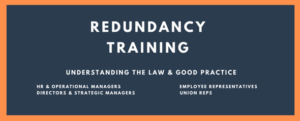
EXPLORE OUR Redundancy and TUPE Training
There are significant legal, financial, and reputational risks associated with getting these Redundancy and TUPE processes wrong. Our training helps you avoid these.

Explore Our Employee Representative Training
The role of the employee representative is very different to their day job. It is seldom an easy one. Sitting between their colleagues and the employer they are tasked with cascading difficult messages in both directions, striving to deliver win-win out comes for both sides. Our training helps them perform better in role.

ExPLORE OUR WORKPLACE Sexual Harassment Prevention Training
Sexual harassment is probably present to some extent in most organisations. Employers have legal duty to take all reasonable steps to prevent it. Our training adds gravitas to your internal policies, helps demonstrate “all reasonable steps” have been taken and improves policy effectiveness. It is a low cost, high quality, way to help prevent sexual harassment at work

EXplore Our Data Protection Training
GDPR Training – PECR Training – DUAA Training
Data protection training is important because most breaches occur due human error, the legislation not being understood, company policies and procedures being ignored or data protection not thought about. Regular training increases data protection awareness and understanding and in doing so reduces the risk of data protection breaches.

Explore Our EQUAL PAY and PAY GAP REPORTING Training
larger UK businesses are required to report on the CEO pay gap, gender pay gaps, ethnicity pay gaps, disability pay gaps. Our training demonstrates how to complete equal pay audits, make the calculations and report gaps. It also explores the actions can be taken to reduce pay gaps.
Who are our Customers?
Concrew Training works with organisations that expect high standards – we deliver and at very affordable prices.
Concrew Training work with business and organisations of all shapes and sizes across all sectors. We work with large multi-national corporate business, small local organisations, UK charities and local Government. We would be pleased to work with you.
Our customers include:































FAQ – Frequently asked Questions About Concrew Training
What do you Do?
Concrew Training Provide
- Training for HR professionals
- CPD for Employee Representatives
- Management and leadership training courses
- Training for senior leaders and directors
- Line manager compliance training
- Employment Law and Compliance Training
What are you most Popular Topics?
- employee representative training course
- preventing sexual harassment at work training
- Investigating Sexual Harassment at Work
- redundancy planning and consultation training
- equality diversity and inclusion training for managers
- GDPR and data protection training for staff
- Train the trainer courses UK
Where do we operate?
We deliver training throughout England, Scotland and Wales.. Our courses can be delivered on your premises or online, live in real time, via your video conferencing platform (TEAMS ZOOM Etc).
How much does our training cost?
Our training is high quality and very budget friendly. We publish indicative prices on our website. We offer discounts for payment before delivery, conversely premiums apply for delayed payment terms. Our advertised prices are valid for all online training. For face to face training on your premises they are valid for central and northern England including London, Liverpool Manchester, Birmingham and Leeds. A small premium applies when travel time exceeds 2 hours. Please ask for a bespoke no obligation quote
Who ARE Concrew Training’s Customers?
We work with businesses of all sizes; from SME to Multinational Corporations.
Our customers include well known names such:
We also work with well known charities such as
These are only a few of our well known customers, we have many more and numerous less well known customers too. see below and our recent customer list:
Why Choose Concrew Training?
we offer high quality, real-world, practical training at very affordable prices.
Our training focuses on practical application, not just theory. Delegates leave with tools and techniques they can use straight away.
Who delivers the training?
We have an inhouse team of trainers, all are subject specialists with in depth experience or teaching and training others
Do you use experienced Trainers?
Our trainers bring years of industry experience and deliver engaging, interactive sessions that keep participants engaged, involved and learning. Our trainers are subject specialists and able to answer virtually any subject related question.
Can content be tailored to my Organisation?
Absolutely, we actually prefer this approach. It helps contextualise the learning and make it far more effective. We do not charge extra for customisation.
Where do you deliver training?
We can deliver training:
- On-site at your location
- Live virtual training via your video conference platform
- Blended learning options
- Corporate training London
- Workplace training courses Manchester
- Business training Birmingham
- Corporate training courses Leeds
- In-company training Scotland / Glasgow / Edinburgh
- Wales / Cardiff
Who is Our Training For?
Our courses are designed for:
- Businesses and organisations across the UK
- HR and L&D teams
- Directors and Senior Leaders
- Managers and team leaders
- Department Specialists
- Internal trainers and subject experts
Whether you’re upskilling a small team or rolling out training organisation-wide, we can support you.
How does Our Training Work?
- Consultation – We understand your goals, challenges, and team needs
- Customisation – We tailor the course content to your organisation
- Delivery – Interactive, engaging training sessions
- Results – Practical skills applied immediately in the workplace
- Proven Results
What do your clients and customers say?
Our customers and clients say things like:
- Improved confidence in delivering training
- builds stronger leadership and communication skills
- Better team performance and engagement
Check out some actual delegate, customer and clients quotes
How long are your courses?
Course length varies depending on your needs, typically 3 hours to one-day. We also offer 1 hour awareness sessions and multi-day programmes. We tailor our courses to meet your needs